Clean Slate Delaware
In 2021, Delaware became the fifth state to pass laws that meet Clean Slate criteria: automation of record clearance, automated clearance upon eligibility of the record, inclusion of arrest records, inclusion of misdemeanor records, and a strong recommendation for laws to include eligibility of at least one felony record. These laws provide greater equity, consistency, and cost-effectiveness through a streamlined automated process that applies to all Delaware records eligible for mandatory expungement.
CLEAN SLATE IS NOW LIVE!
Delaware’s Clean Slate Law began implementation on August 1, 2024. We're here to make sure you receive consolidated, accessible, and accurate information about the automated expungement process and ensure implementation is smooth for those who need that relief as soon as possible.
Automated mandatory Expungement Process
This hub features:
- Upcoming Expungement Clinics and Events
- Expungement Assistance
- Financial Assistance
- Fines and Fees Fund
- Second Chances Pledge
- Frequently Asked Questions
- Downloadable PDF Resources
Have a record from another state?
The information on this hub is relevant to individuals with Delaware records. If you have a record from another state, please visit cleanslateinitiative.org/states to get in touch with your state's Clean Slate coalition.
DEMAND ACTION: Clean Slate Can't Wait.
As of November 2024, only 805 records have been cleared under Delaware's Clean Slate law — less than 1% of those eligible for mandatory expungement — and little progress has been made to create an accessible pathway for Delawareans to learn if their record has been cleared.
It's past time for tangible results and accountability from those who have promised to take action to support Clean Slate. Governor Meyer and Lt. Governor Gay must take these concrete steps within their first 90 days in office:
- Use the resources and support available to Clean Slate states to remove unnecessary manual processes currently delaying the clearance of hundreds of thousands of eligible records and automate Clean Slate record clearance; and
- Create a pathway for people to learn if their record has been cleared and access their own expunged records for immigration, federal employment, military enlistment, and other purposes.
As our executive leadership works to move Delaware’s existing Clean Slate law forward, state legislators must work to pass legislation to allow individuals to clear their records regardless of the fines and fees they owe.
During the 2024 election season, the ACLU of Delaware's voter information hub, VoteDelaware.org, featured candidate questionnaire to help voters learn more about where local and state candidates landed key issues like Clean Slate. As newly elected officials begin their terms, their responses will remain accessible right here.
Get involved
CSDE Happenings
In 2021, Delaware became the fifth state to pass laws that meet Clean Slate criteria: automation of record clearance, automated clearance upon eligibility of the record, inclusion of arrest records, inclusion of misdemeanor records, and a strong recommendation for laws to include eligibility of at least one felony record. These laws provide greater equity, consistency, and cost-effectiveness through a streamlined automated process that applies to all Delaware records eligible for mandatory expungement.
CLEAN SLATE IS NOW LIVE!
Delaware’s Clean Slate Law began implementation on August 1, 2024. We're here to make sure you receive consolidated, accessible, and accurate information about the automated expungement process and ensure implementation is smooth for those who need that relief as soon as possible.
Automated mandatory Expungement Process
This hub features:
- Upcoming Expungement Clinics and Events
- Expungement Assistance
- Financial Assistance
- Fines and Fees Fund
- Second Chances Pledge
- Frequently Asked Questions
- Downloadable PDF Resources
Have a record from another state?
The information on this hub is relevant to individuals with Delaware records. If you have a record from another state, please visit cleanslateinitiative.org/states to get in touch with your state's Clean Slate coalition.
DEMAND ACTION: Clean Slate Can't Wait.
As of November 2024, only 805 records have been cleared under Delaware's Clean Slate law — less than 1% of those eligible for mandatory expungement — and little progress has been made to create an accessible pathway for Delawareans to learn if their record has been cleared.
It's past time for tangible results and accountability from those who have promised to take action to support Clean Slate. Governor Meyer and Lt. Governor Gay must take these concrete steps within their first 90 days in office:
- Use the resources and support available to Clean Slate states to remove unnecessary manual processes currently delaying the clearance of hundreds of thousands of eligible records and automate Clean Slate record clearance; and
- Create a pathway for people to learn if their record has been cleared and access their own expunged records for immigration, federal employment, military enlistment, and other purposes.
As our executive leadership works to move Delaware’s existing Clean Slate law forward, state legislators must work to pass legislation to allow individuals to clear their records regardless of the fines and fees they owe.
During the 2024 election season, the ACLU of Delaware's voter information hub, VoteDelaware.org, featured candidate questionnaire to help voters learn more about where local and state candidates landed key issues like Clean Slate. As newly elected officials begin their terms, their responses will remain accessible right here.
Get involved
CSDE Happenings
Events, Resources, and More
Documents
- CSDE Hub One-Pager
- CSDE Hub One-Pager (ESPAÑOL)
- Automated Expungement Process One-Pager
- Proceso automatizado de eliminación de antecedentes penales de borrón y cuenta nueva de una página
- Mandatory Expungement Eligibility List
- ODS Live Chatbot Guide
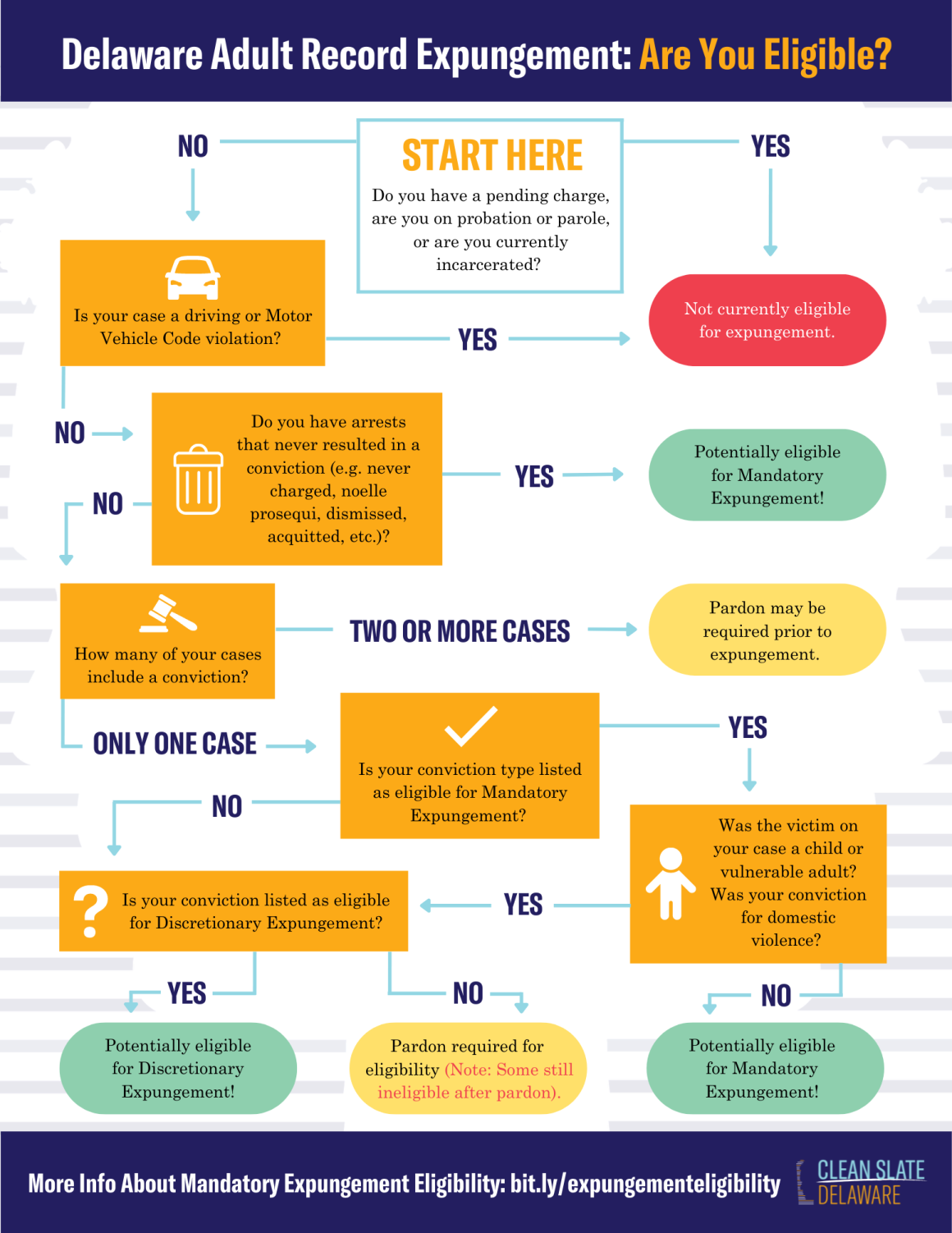
- Delaware Adult Record Expungement Flowchart.pdf
- Friendship House Fines and Fees Fund Assistance
- Friendship House Fines and Fees Fund Donation