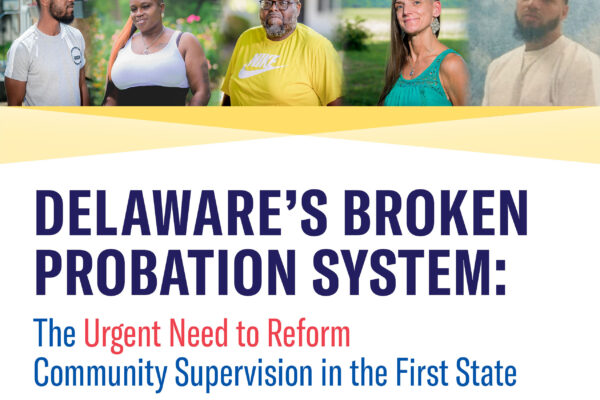


COVID-19 impacted Delaware’s criminal justice system in many ways, including how we police communities and those on probation. Those changes have led to the biggest decrease in Delaware’s prison and probation populations in the last ten years.
Prior to this year, Delaware’s probation system was a rotating door for people: incarceration, probation, incareration, probation, repeat. People on probation were often violated for a technical condition or “crimeless” condition of their probation, such as missing meetings with their probation officer, missing curfew, or failing a drug test. Recently, though, the Department of Correction (DOC) temporarily stopped incarcerating people for technical violations during the COVID-19 outbreak.
Between February and August 2020, Delaware’s probation population dropped by roughly 1,935 people, and the incarcerated population decreased by 900. While the exact cause of this decline is unknown, it is likely attributable to a combination of factors that include: reduced crime; changed policing methods that caused fewer people to be charged with a crime and ultimately sentenced to probation; judges being cognizant of the impact on the defendant and the system of placing another person on probation or in jail; probation officers altering some of the conditions of probation, such as conducting meetings by phone rather than in-person; or even the DOC determining that additional monitoring was no longer necessary.
One thing is certain: COVID-19 forced criminal justice system stakeholders to reconsider who should be in the system and who should not.
As Delaware’s leaders face a budget deficit, the benefits of permanently adopting these temporary changes to the criminal legal system become even more apparent. If state leaders were able to reduce the number of technical probation violations by 60 percent and cut the average amount of time on probation by half, they would save at least $37 million by 2025. Those are dollars we can reinvest in our schools, healthcare, economic development, and enhancing reentry services.
When the threat of this virus eventually wanes, and as Delaware continues to navigate a new normal, our leaders must remember that the lives of those involved in the criminal justice system are always on the line. The response to COVID-19 has shown that expedient change is possible. If the system's leaders decide to, they can permanently change our probation and policing system — and they can do it quickly. These temporary changes made in response to the COVID-19 crisis have improved our system for the better. This should become the new normal, and we should not return to the status quo as it existed in the pre-COVID world.