
Morgan R. Kelly
Communications Director
She, Her
Angelo Clark, who lived with serious mental health issues, was placed in solitary confinement by Department of Correction (DOC) officials for seven months while he was housed in a Delaware prison. This violation of his Constitutional rights caused severe and irreversible harm to Clark, who passed away before he was able to finish his fight for justice.
At trial, the Court erroneously dismissed his claim that the extended solitary confinement violated the Eighth Amendment’s prohibition on cruel and unusual punishment. Among other reasons, the trial court held that the DOC officials enjoyed qualified immunity — meaning that they were immune from accountability.
Before he passed away in January 2022, Clark appealed this dismissal to the United States Court of Appeals for the Third Circuit. This is where we came in to the case.
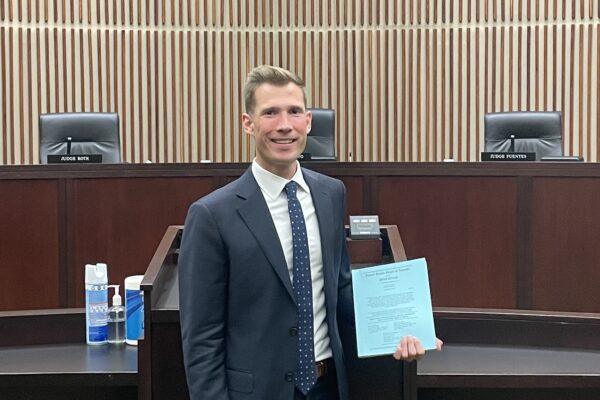
On Wednesday, March 30, 2022, we handled oral arguments in the Third Circuit Court. The oral arguments were presented by Dwayne J. Bensing, staff attorney.
Here's Dwayne's statement on those arguments:
“Department of Correction officials placed Angelo Clark, a person with severe mental illnesses, in solitary confinement for seven months in 2016. That’s seven months where the only human contact Mr. Clark experienced were the handoff of food through a four-inch slot in his door and one hour outside of his cell just three days per week.
"We’re asking the Third Circuit to again recognize that harm, and to allow the Vaughn prison administrators to be held accountable for violating this clearly established 8th Amendment right to be free from cruel and unusual punishment." — Dwayne J. Bensing, Staff Attorney
Courts, including the very members of today’s panel, have regularly recognized the substantial risk of serious harm that extended periods of solitary confinement impart on a person. We’re asking the Third Circuit to again recognize that harm, and to allow the Vaughn prison administrators to be held accountable for violating this clearly established 8th Amendment right to be free from cruel and unusual punishment.
In the months he was held in an eight-foot by eleven-foot cell, Mr. Clark repeatedly begged for his release. From the prison walls to the Courtroom, no one listened to those pleas. We’re asking the U.S. Court of Appeals for the Third Circuit to listen and respond accordingly so that no other Delawarean has to live through the same experience.”
ACLU of Delaware Legal Director Susan Burke wrote the briefs for this matter, with the assistance of co-counsel Chad Stover of Barnes & Thornburg and Michael Broadbent of Cozen O’Connor.