

Morgan R. Kelly
Communications Director
She, Her



FOR IMMEDIATE RELEASE:
Thursday, December 3, 2020
CONTACT:
Morgan Keller, Communications Director, ACLU of Delaware
Phone: 302-654-5326 ext. 109, Email: [email protected]
Advocates and Public Health Experts Call on Carney and DOC to Make Urgent Changes to Mitigate COVID Outbreak
WILMINGTON — On Tuesday, December 1, the Delaware Department of Correction (DOC) announced 471 positive cases in DOC facilities between incarcerated people, correctional staff, and contracted staff. These numbers make it clear that the current surge of COVID-19 has, as advocates have predicted since March, created a crisis for those living and working in our prisons.
“Tuesday’s announcement paints a somber picture for Delaware’s incarcerated population, as well as for those who work for the Department of Correction,” said Mike Brickner, executive director of the ACLU of Delaware. “We are already among the highest rates in the nation for COVID deaths of incarcerated people. Our leaders must act immediately to ensure that we don’t become the leaders of that list.”
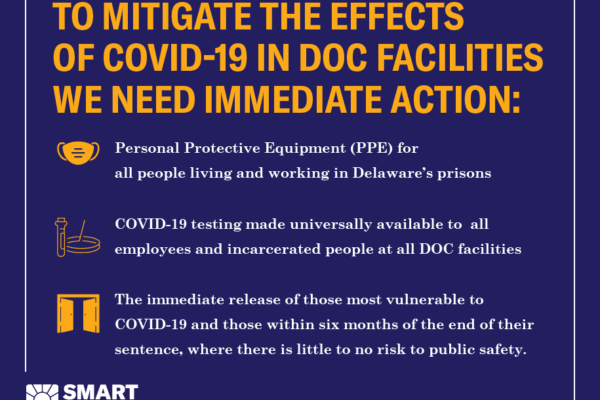
The ACLU of Delaware and the First State Chapter of the National Medical Association sent a letter to Governor John Carney and DOC Commissioner Claire DeMatteis with a list of policy recommendations that advocates and public health officials say will help save the lives of DOC’s staff and incarcerated population. The recommendations include:
- Ensuring that incarcerated individuals have access to personal hygiene items at no cost;
- Continuing the sending and receiving of mail and phone calls free of charge;
- Implementing consistent widespread testing for all incarcerated individuals and DOC staff;
- Downsizing the footprint of the prison population and minimizing new admissions; and
- Working with community stakeholders to ensure that people who are released from prison have a safe, accessible place to live, a livable income, and access to healthcare.
Dr. Shauna McIntosh, President of the First State Chapter of the National Medical Association, said “Governor Carney and Commissioner DeMatteis must work together to act on the public health recommendations they’ve been receiving since the start of the pandemic. There is no time to waste in enacting these measures to mitigate the impact of the current outbreak and attempt to control any future spread of the virus for the duration of the pandemic.”
As COVID-19 cases continue to rise in Delaware, we must seek every opportunity to stop the spread and protect Delawareans, especially those most vulnerable to the virus. The recommendations outlined in the ACLU-DE & NMA letter sent today are important steps forward on that mission.
###