Delawareans deserve transparency, accountability, and true public safety. In this case, that means being safe from law enforcement officers who are sworn to protect us, while building trust between cops and the community, which can also lead to safer neighborhoods.
Right now, that is not possible under Delaware law. There are several major components of police reform that the General Assembly must address in 2027 to improve true public safety: public access to body camera footage, strengthening police accountability boards, and creating a strong uniform use-of-force policy.
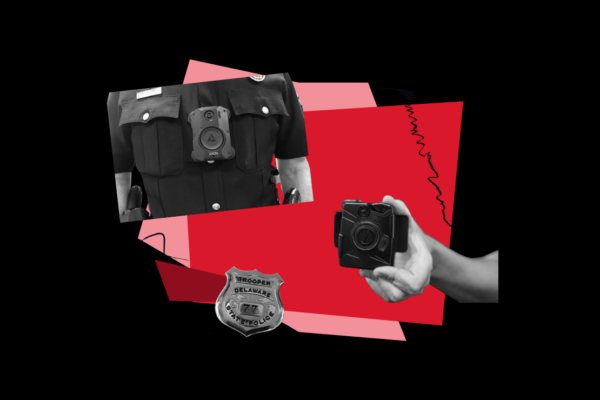
Let’s start with body camera access. When 19-year-old Kadir Skinner was shot and killed by a Wilmington police officer in June 2026, it took strong public pressure for nearly a month before footage was released. By then, the department’s initial account, that Skinner pointed a gun at a crowd, may have already shaped public perception. But once again, the video told a different story: Kadir running, no gun aimed, a loose dog chasing him, getting shot in the back, collapsing, telling officers “I don’t got nothing” and that he couldn’t breathe, while officers kept him on the ground handcuffed fighting for his life before eventually bringing him to the hospital.
Families shouldn’t have to organize marches and press conferences just to see what happened to their loved one. A clear process is needed to make access to body worn camera video the rule, not something families have to fight for.
Or take our use-of-force policy. Delaware still doesn’t have one statewide standard that every department follows. Instead, each of the state’s police agencies sets its own rules, which means what might count as justified force in Wilmington might not match what’s justified in Rehoboth or Dover. The need for a statewide comprehensive use-of-force policy is clear in the case of Lymond Moses, a 30-year-old Black man shot and killed by New Castle County officers in 2021 after they woke him in his parked car. The Delaware Department of Justice ultimately ruled the shooting justified, but its own report acknowledged the death could have been avoided with better tactics and even discouraged firing at moving vehicles as a use of force tactic. No officer has ever been criminally prosecuted for killing a civilian in Delaware’s history.
A uniform, statewide use-of-force standard that covers: de-escalation, shooting at moving vehicles, when force is proportionate, and what happens when it isn’t closes the loopholes that let tragedies like this end without accountability.
That’s also where police accountability committees come in. These committees were supposed to give civilians a real, independent role in holding police accountable, instead of leaving departments to police themselves. But in reality, these committees can’t even receive complaints. Strengthening them means giving them investigative power and independence from the law enforcement agencies they’re overseeing, not just a seat at the table with no teeth.
There’s so much more we could be doing on this front. But as we’ve seen in the killings of Jeremy McDole, Kadir Skinner, and Lymond Moses, these three reforms alone could save lives or, at minimum, give families and the public the transparency and accountability they deserve. The McDole, Moses, and Skinner families had to sue, protest, and push for answers that should have been available as a matter of transparency. This can no longer be a reality for us.
The next wave of police reform in Delaware starts with you and ends with who’s representing you at Legislative Hall. Start strong by educating yourself on who’s representing you. Visit votedelaware.org to learn more about where candidates stand on the reforms mentioned above and be sure to put the information to good use. Lives depend on it.